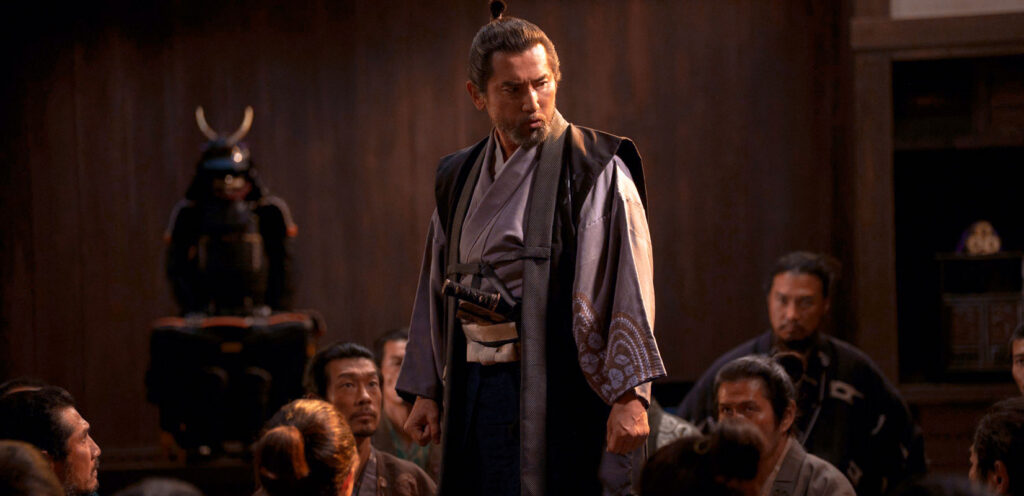
Although Kiyoshi Kurosawa’s The Samurai and the Prisoner may look like a sweeping samurai epic, it is a different film. Anyone waiting for nonstop sword fights may be surprised. The film focuses on the damage people cause through secrets, suspicions, and carefully chosen words.
At the center is Lord Murashige Araki. A real figure from 16th-century Japan, Murashige has broken with the powerful warlord Nobunaga Oda and sealed himself inside his fortress. His authority appears absolute, but that image begins to shatter when a series of strange crimes occur that suggest someone or some people inside the castle are working against him.
Murashige turns to Kanbei Kuroda, a brilliant strategist held prisoner beneath the fortress. Masaki Suda plays Kanbei with lively, mischievous energy. His conversations with Murashige contrast sharply with Murashige’s heavy stillness. Kanbei rarely offers direct answers. Instead, he gives riddles, questions, and inconvenient observations. The setup resembles The Silence of the Lambs more than a conventional war film: a powerful man repeatedly descending into confinement to get advice from someone he cannot fully trust to solve a mystery.
Kiyoshi Kurosawa’s The Samurai and the Prisoner trades swordplay for psychological warfare in a tense, intelligent tale of power and deception.
The story unfolds across four chapters, each bringing a fresh mystery for Murashige to solve. Kurosawa patiently builds paranoia, letting glances, rumors, and partial conversations carry as much danger as Nobunaga Oda’s incoming forces. This framework gives the film an engaging rhythm at first. Unfortunately, the deliberate pace and repetitive chapters become sluggish after a while.
Thankfully, the film is gorgeous. Kurosawa carefully arranges interiors and striking outdoor compositions that make the castle feel both majestic and oppressive. There are also large-scale images of armored men assembled across the landscape.
As Lord Murashige Araki, Masahiro Motoki plays him with commanding restraint. His Murashige has unquestionable authority yet an unexpected approachability, expressing the character’s pacifist instincts. When his stoicism slips under pressure, brief flashes of anxiety and irritation hit hard. Suda is more openly expressive, and his warmth makes it easy to see why even his keeper begins forming an odd connection with him.
Overall, uneven pacing aside, The Samurai and the Prisoner is an intelligent, beautiful film with spectacular performances by Motoki and Suda. Once you realize the film is not about history’s grand events so much as the people forced to interpret them from incomplete evidence, then you’ll begin to appreciate what Kiyoshi Kurosawa is building.
Rating: 4/5 atoms

The Samurai and the Prisoner hits theaters on July 31st.