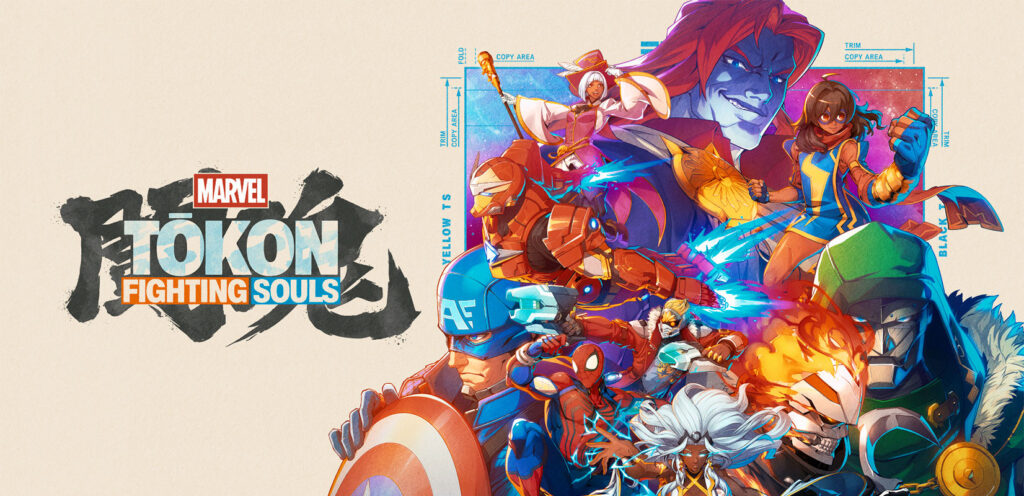
I used to think I was pretty good at fighting games. I played a lot of Capcom vs. SNK 2 and Street Fighter II, and I could keep up in Tekken 3 and Marvel vs. Capcom 2. Now, though, I’m definitely more of a casual player, which made trying out Marvel Tōkon: Fighting Souls pretty interesting. Arc System Works has made a fighting game where flashy attacks and team combos are easy to pick up, but actually getting good at them takes real effort.
Tōkon is easy to get the hang of. Moving around feels smooth, and attacks are split into light, medium, and heavy, plus standard and heavy special moves. Using these with different directions makes it much simpler to remember your character’s moves, instead of having to memorize the complex inputs you usually see in fighting games.
That same simplicity shows up in Tōkon’s team mechanics. Bringing in teammates with a press of a button feels natural. As a result, you’ll be launching opponents, swapping characters, and finishing with a big team attack with relative ease. When you compare it to Marvel vs. Capcom 2, Tōkon is less chaotic and makes cool combos much easier to pull off. But don’t mistake easy execution for an easy game.
Easy to Learn, Difficult to Survive
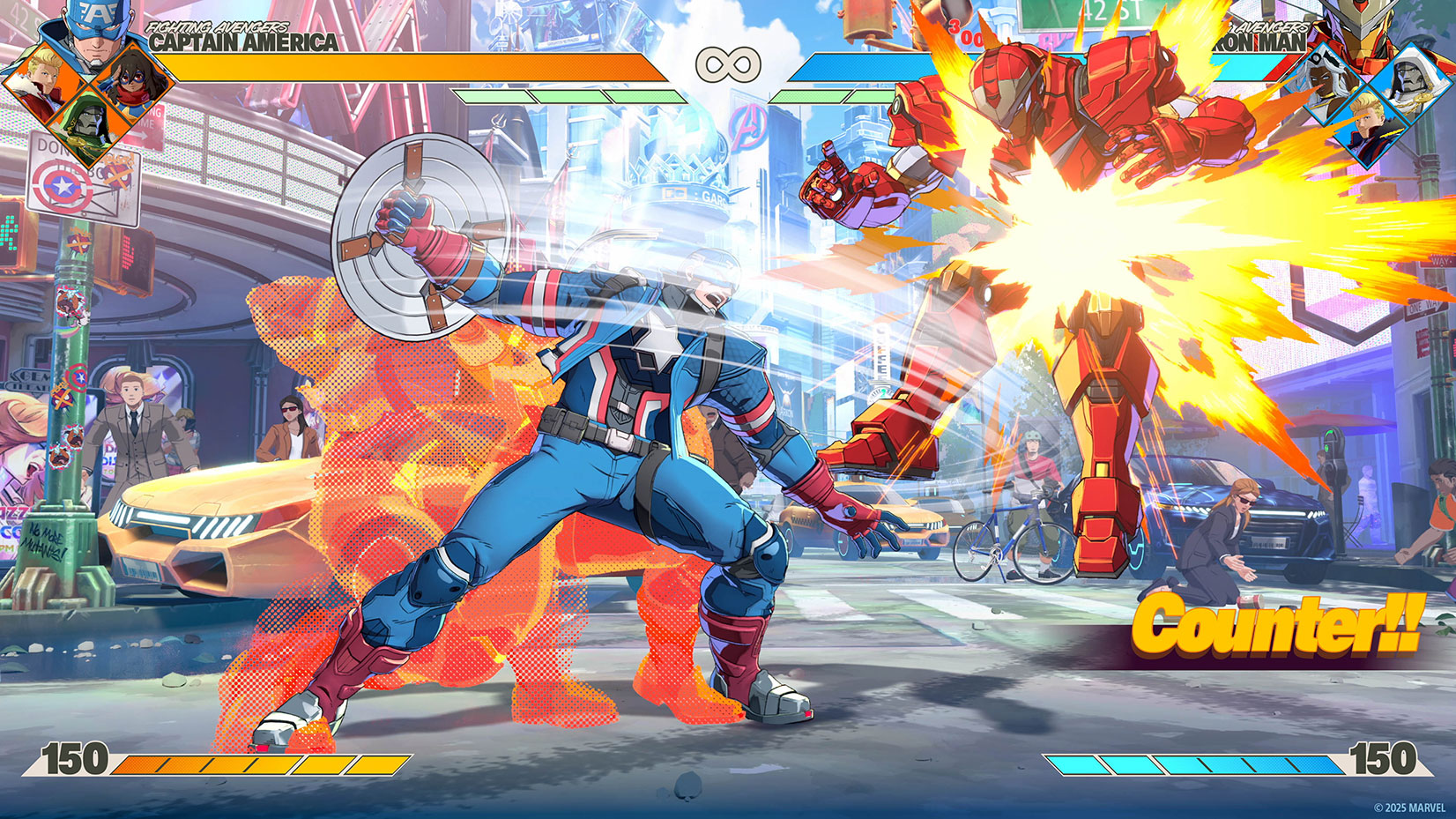
Someone who simply wants to pick up a controller and mash buttons can absolutely have fun with Tōkon. You’ll hit things. Cool Marvel stuff will happen. Characters will fly across the screen. For a while, you’ll probably feel pretty powerful.
Then someone counters you.
Defense is where Tōkon starts to separate casual players from those who really know the game. Timing matters a lot, and if you know when to counter, you can quickly turn defense into offense. Because combos aren’t that hard to do, a single well-timed defensive move can lead to a long and punishing combo.
This creates an interesting situation in Tōkon. Arc System Works made the controls easy for newcomers, but the game doesn’t really reward you if you stay at that beginner level. This becomes especially noticeable in Story Mode.
The game gets harder as you keep winning against the CPU, and there’s no way just to pick a difficulty and stick with it. If things get too tough, losing lets you lower the difficulty for another try, but once you win, you’re back to where you started. For players interested in learning the game’s systems, I understand the philosophy behind it. Tōkon wants you to improve.
If you bought the game just because you love Marvel and want to enjoy the story, this can get frustrating. You might end up stuck in a loop of losing, lowering the difficulty, winning, and repeating, unless you’re ready to spend time learning defense and your characters’ moves.
The same goes for online play. You might get by with button mashing at first, but anyone who knows Tōkon’s defensive mechanics will quickly beat you.
Thankfully, Tōkon gives you some exceptional tools for becoming that better player.
A Fighting Game That Actually Teaches You How to Fight
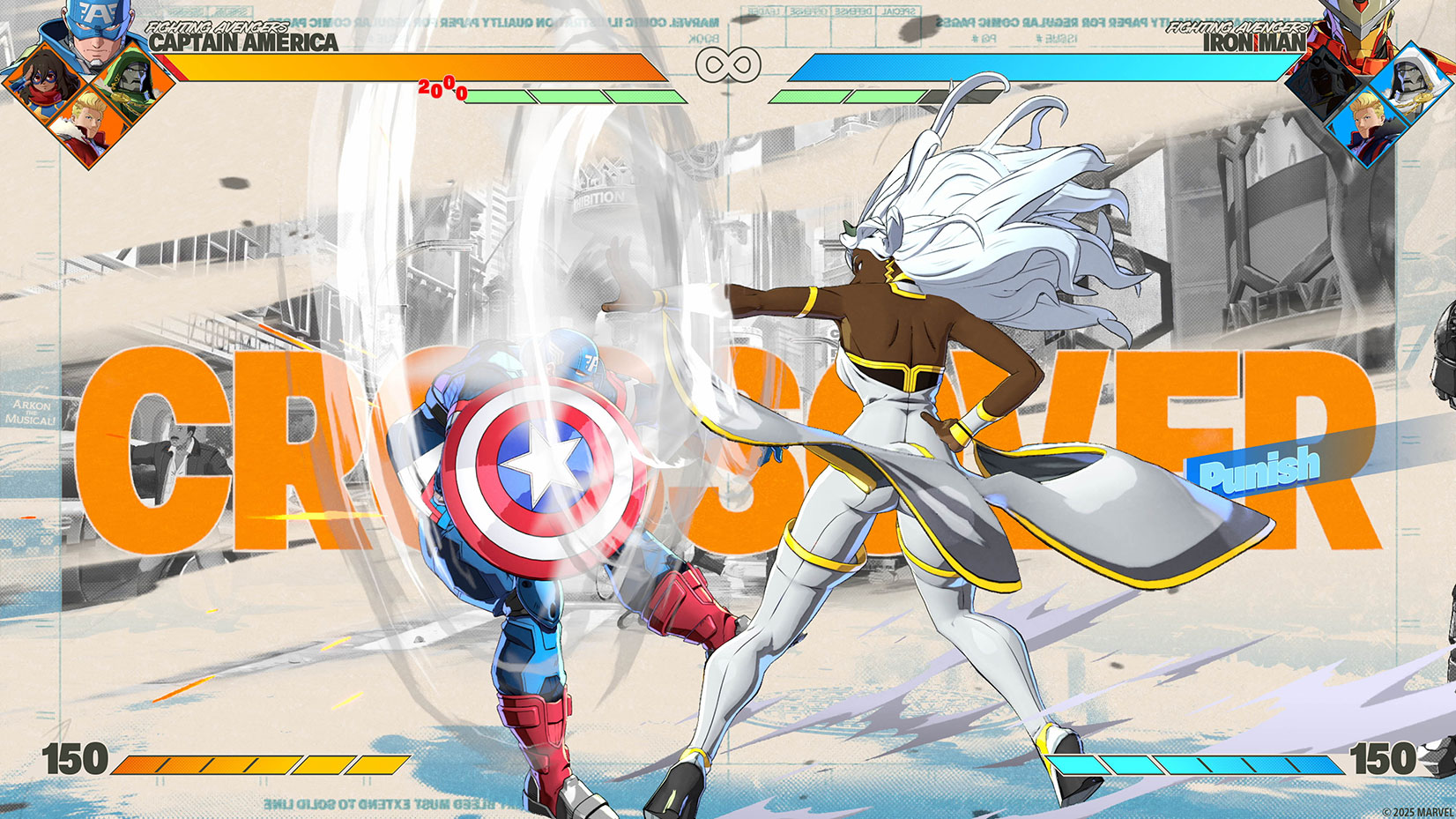
Tōkon features some of the best teaching tools I’ve encountered in a fighting game.
The tutorials teach you the basics through hands-on lessons, and each character has a guide that explains their main moves. There are also practical combo lessons that show how to turn certain attacks into real damage, plus a great free-form combo challenge mode.
Instead of just asking you to memorize a set button sequence, these challenges might have you use a specific move in a combo and hit a certain damage goal. It’s a small distinction that completely changes how you learn.
Rather than just copying someone else’s combo, you’re encouraged to try things out and learn how your character’s moves fit together. The exercises show you what to do after landing Spider-Man’s overhead, how to follow up when you don’t have Assemble Meter, or how to get the most damage when your resources are full.
Add in a great Training Mode, searchable replays, replay takeover, and helpful training presets, and Tōkon gives you just about everything you’d want for learning a fighting game. It doesn’t eliminate the steep learning curve, but it does make learning the game a lot more fun.
Four Heroes, One Fight
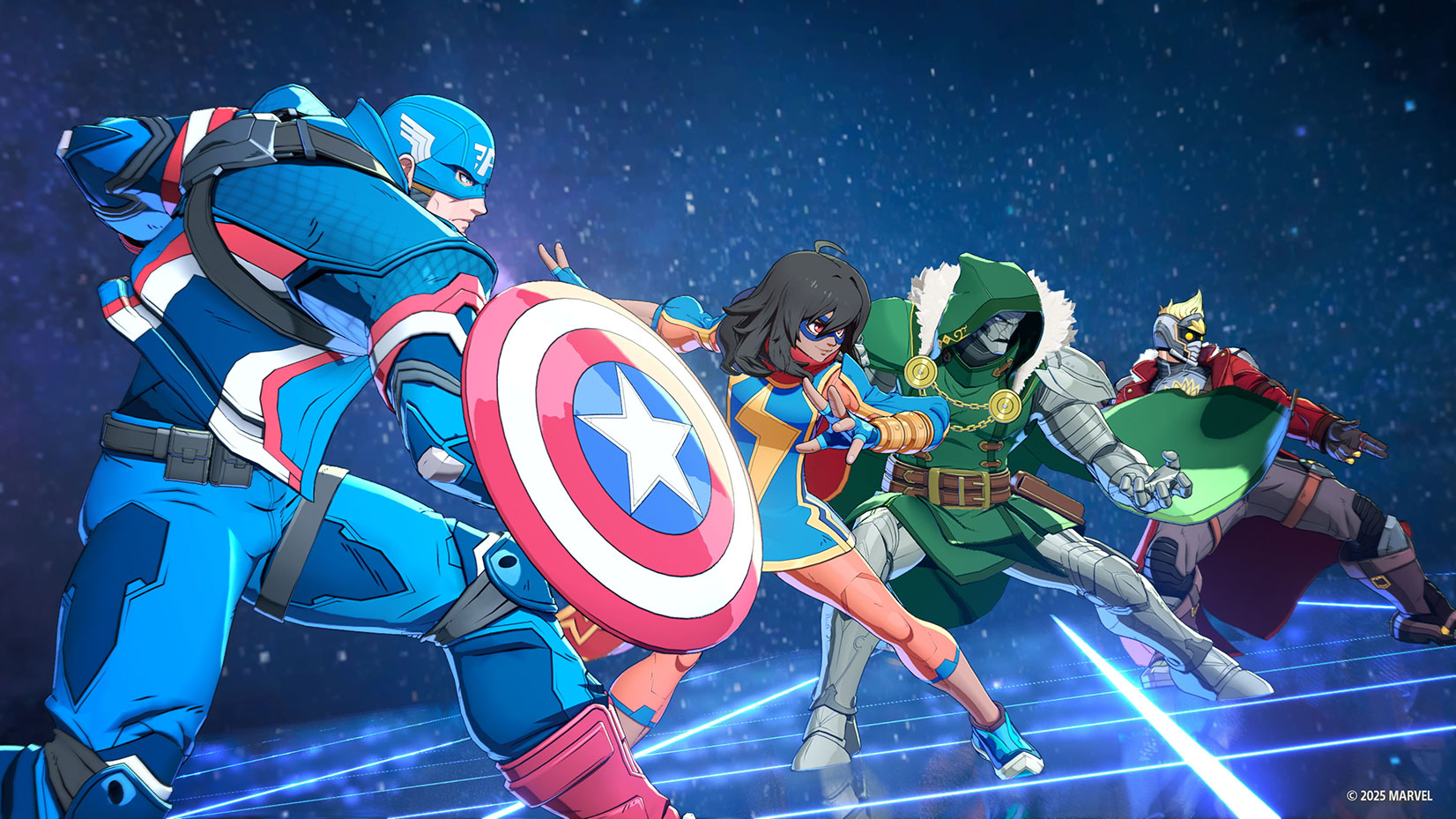
The team system also gives experienced players a lot to try out. Your first character is your team leader, and you start fights with just part of your four-person team. You unlock more teammates during the match by breaking the stage, causing wall splats, or even losing a round.
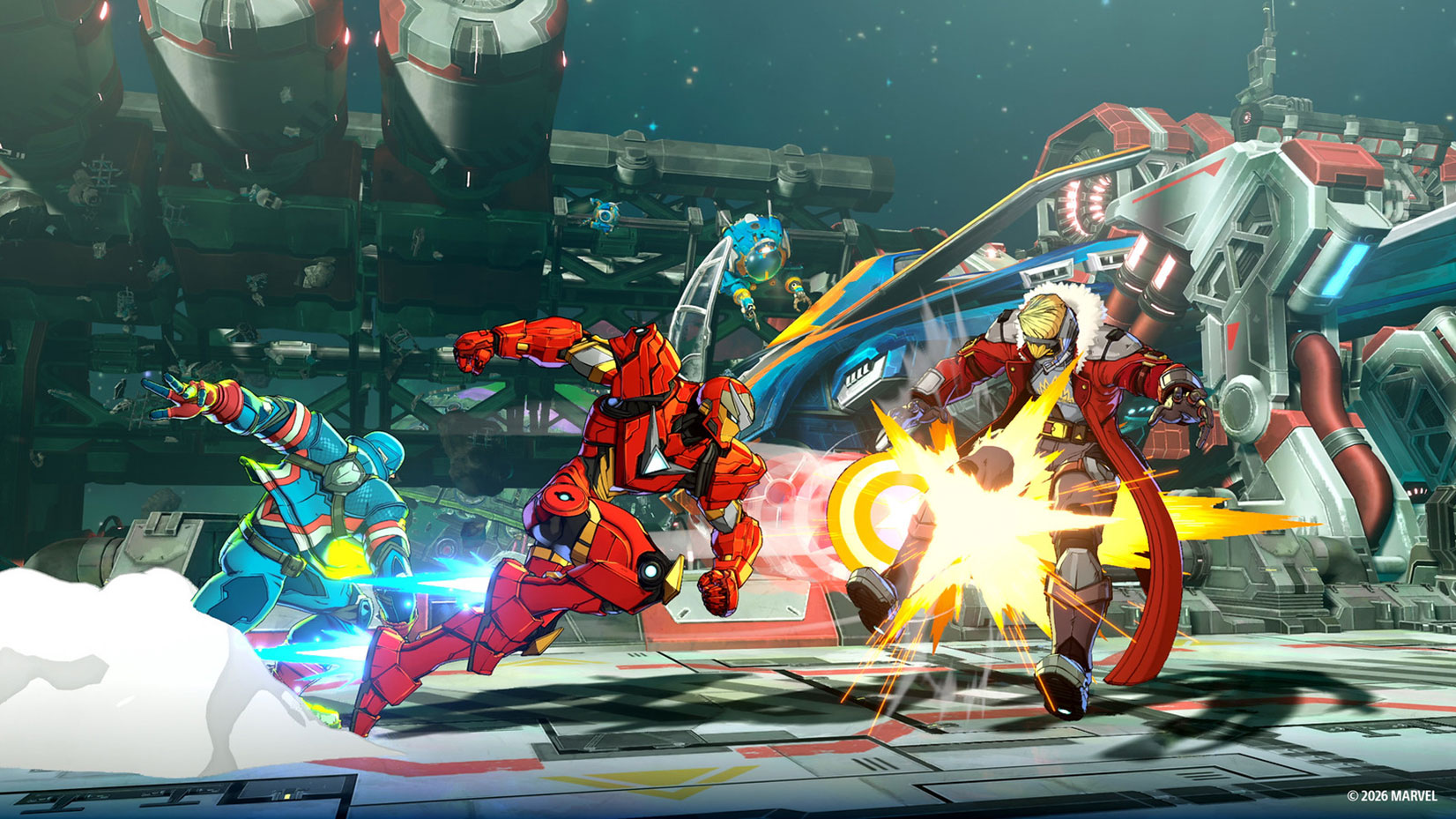
It’s a smart system because it stops matches from getting out of hand right away. Even if your opponent gets ahead early, unlocking more teammates gives you more ways to fight back. Once you unlock your third and fourth characters, things get a lot more interesting. You can start a combo with one fighter, switch to another to keep it going, and maybe finish with a big team attack.
Building your team adds another layer of strategy. Maybe your main character has trouble with Magneto’s zoning. You can set up your team so someone else can handle him better. Or if you like using Blade but have trouble breaking through defenses, you could start with a character who’s good at mix-ups, get your opening, and then tag in Blade to keep the combo going. The controls might be simple, but there’s a lot of depth underneath.
Marvel Through and Through
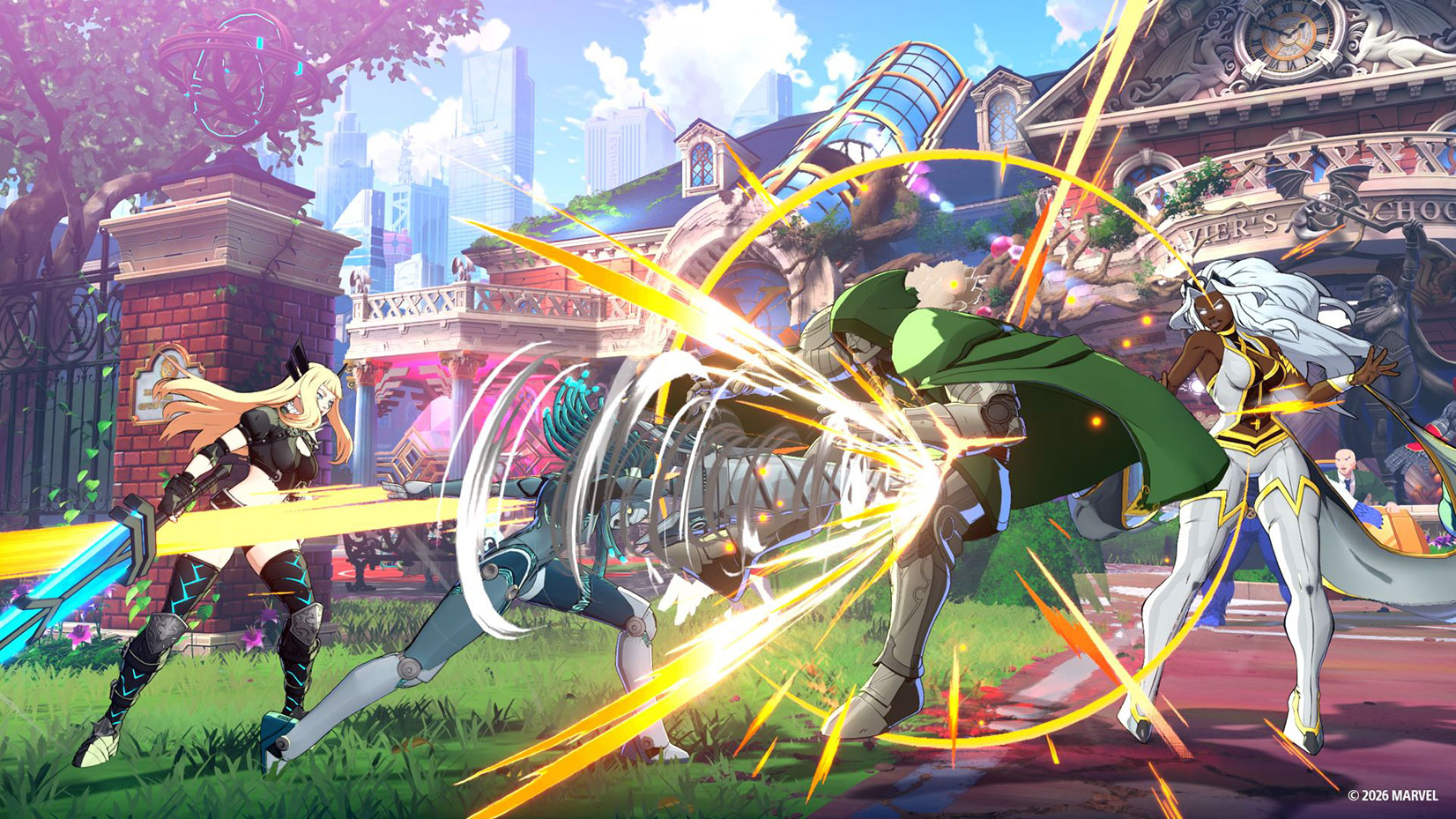
Marvel Tōkon: Fighting Souls really shines in its roster. Arc System Works didn’t just drop Marvel characters into an anime fighting game. Their personalities actually shape how they play. Spider-Man swings around the stage with his webs and can trick opponents into anti-air attacks by hanging above them before jumping away. Magik uses portals to attack from odd angles. Storm controls the weather to move things, control space, and even pull enemies toward her.
Then there’s Deadpool.
Deadpool might be one of the most fun fighting-game characters I’ve played in years. His moves are basically a tribute to the whole genre. You’ll spot attacks and references from Street Fighter, Mortal Kombat, The King of Fighters, Tekken, Guilty Gear, and more.
Accidentally using his take on Scorpion’s famous “Get over here!” move always made me laugh, and spotting bits of Yoshimitsu and other fighting-game characters in his animations kept Deadpool fun to play, even when I was losing.
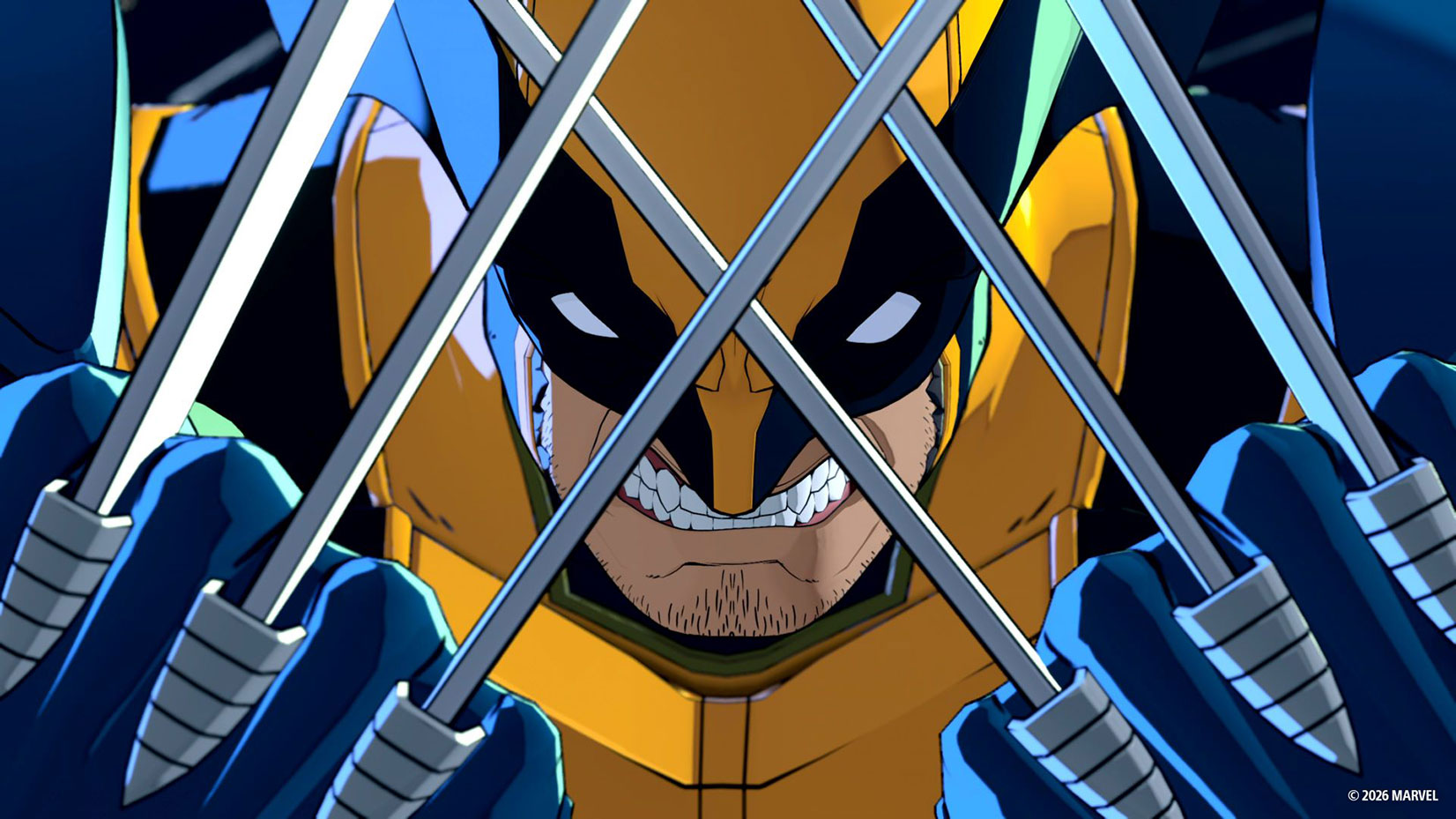
That focus on character is true for the whole roster and might be Tōkon’s best feature. These aren’t just Marvel skins on fighting-game templates. Spider-Man fights like Spider-Man. Wolverine is as aggressive as you’d expect. Storm controls the battlefield just like she should. Beating the CPU at Level 4 with Wolverine was when I knew he’d be my main. His aggressive style just fit how I like to play.
More Than Versus Mode
Surprisingly, Story Mode is another key highlight. The campaign has five episodes, each focused on a different Marvel team, with stories written by comic writer Kieron Gillen. Instead of just using regular cutscenes, most of the story plays out as a motion comic, and different manga and comic artists give each episode its own look.
As a big anime fan, I loved seeing artists like Hiro Mashima (Fairy Tail) and Betten Court (My Hero Academia: Vigilantes) put their own spin on characters like Captain America and Spider-Man. The stories can be a bit formulaic, and I liked some episodes more than others, but the way they’re presented makes them worth checking out. They also give you a good reason to try every character on the roster.
Unfortunately, a lot of the anime scenes get reused between episodes, so after a few stories, you’ll probably end up skipping scenes you’ve already seen. Outside Story Mode, Survival gives you another big solo challenge: survive 100 battles that get harder as you go. Every five rounds, you pick stat bonuses to boost your fighter, and your progress saves at those points. It’s not as tough as most Survival Modes, but it’s still a fun way to play.
Then there’s Arcadia Rumble, Marvel Tōkon: Fighting Souls’ quirky multiplayer side mode. Up to eight players can explore a big lobby with their custom avatars, collect stars, power up fighters, complete events, and battle each other. The mode switches between prep phases and classic 4v4 fights over five rounds.
It’s kind of like someone turned the City Trial mode from Kirby Air Riders into a Marvel fighting game. I don’t think I’ll spend tons of time in Arcadia Rumble, but I like what it brings to the game. Even better, it lets players of all skill levels compete without every match turning into a super technical 1v1 fight.
Final Verdict
Marvel Tōkon: Fighting Souls does something you don’t see often. It makes fighting look simple, but it’s not actually easy.
The simple controls let casual players jump right in and pull off cool attacks, flashy combos, and big team moves. But underneath that, the game still demands good timing, defense, matchup knowledge, and smart team building. That’s what makes the game great, but it can also be frustrating at times.
If you’re here just for Marvel, you might find Story Mode’s changing difficulty tougher than expected. And online, you’ll quickly see that button mashing won’t replace learning the game’s defense.
But if you’re willing to learn the systems, you’ll find a really rewarding fighting game with great learning tools, tons of team-building options, and one of the best Marvel rosters I’ve seen.
And for longtime fighting-game fans, Marvel Tōkon: Fighting Souls gives you plenty of depth without making you do crazy controller tricks just to pull off something cool. I’m not the fighting-game player I once was, but Tōkon might just inspire me to get better again.
Rating: 4/5 atoms