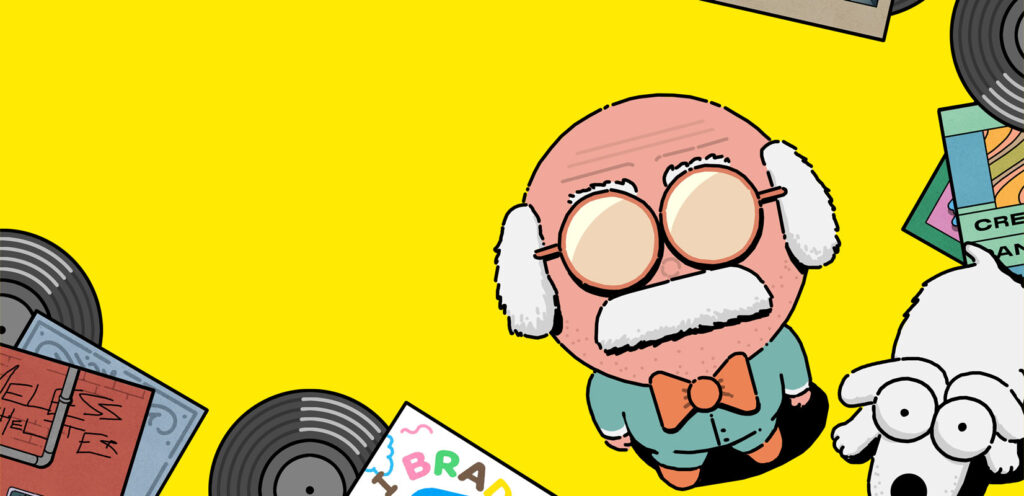
Mr. Records turned out to be one of those demos that became a fun surprise at Summer Game Fest. I sat down expecting a quirky rhythm game. I left wondering how a rhythm game about an older man running a record store could hit me harder than most story-driven games at the show.
You play as George, an older music lover finally chasing his dream of opening his own record shop. The core loop revolves around discovering songs and turning them into records you can actually sell. Each track drops you into a colorful representation of George’s imagination where you play through rhythm-based stages. When you finish a song, you put it on the shelf, then help customers find records that speak to whatever they’re looking for. Before long, I found myself caught in the cycle of collecting songs just to see who they’d connect with next.
The rhythm gameplay starts off approachable. Like most rhythm games, it mostly asks you to nail basic timing, but it doesn’t stay there. New mechanics gradually layer on top of each other, introducing directional inputs, trickier patterns, and more demanding sequences.
What really sells the experience isn’t the rhythm gameplay, though. It’s the people who walk through George’s front door. Every customer arrives carrying something—a memory, a regret, a crush, a loss. Thus, finding the right record becomes less about making a sale and more about understanding who they are.
There’s a surprisingly wide range of musical styles on display, which helps keep things fresh. Not every genre was something I’d normally seek out, but that almost became part of the appeal.
By the time my demo ended, I was gleefully surprised at how much I got into the game. I was entranced by the game’s rhythmic element. Then, I became happy helping the people I’d met and the stories tied to the records sitting on George’s shelves. That’s what makes Mr. Records stand out. It understands that music isn’t just something we listen to—it’s something we attach pieces of our lives to.