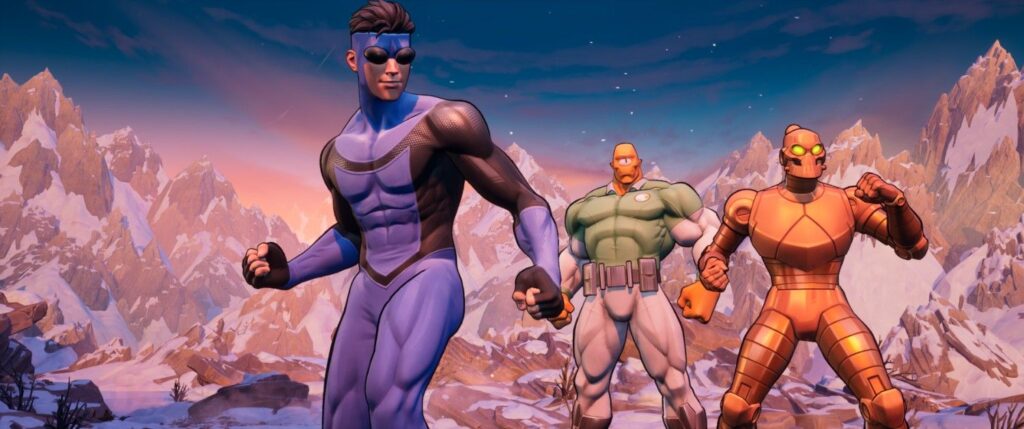
The sensational Image comic, Invincible, has entered the fighting game arena. Invincible VS does its best to capture the energy and action of the Amazon Prime show. It brings some characters to life on screen in a different way in a violent, bloody, and easy-to-pick-up-and-play experience.
The game includes 18 characters from the show that bring a solid variety to the fighting roster. Obviously, there are the main characters of the current Guardians of the Globe to fill in most of the roster. But there are also some of the big antagonists to fill out the rest of the roster. This creates an overall balanced cast despite one concern. Are there too many Viltrumites?
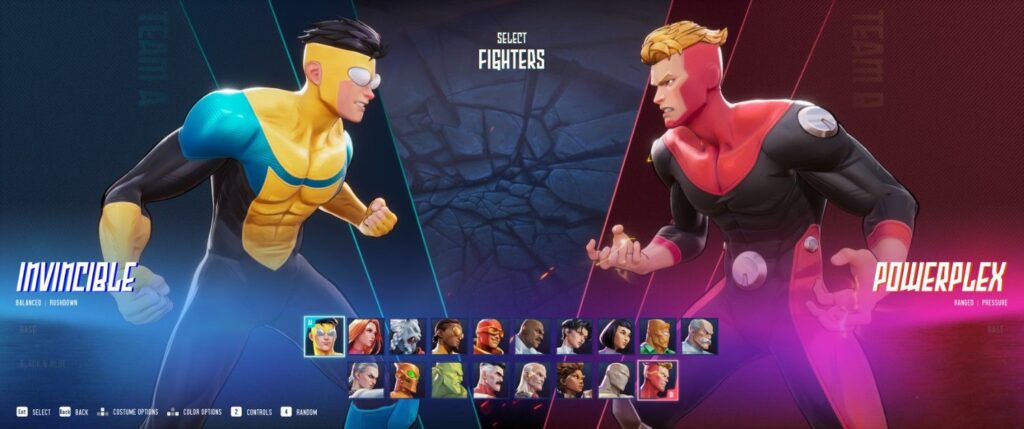
A good portion of the characters look the same and have the same powers. However, they each have their unique feel. With so many of those characters, would it have been better to include some others? Such as the main villain from Season 3, Angstrom Levy, or the other main current member of the Guardians of the Globe, Shapesmith. Which would help bring some variety to the roster of the characters available.
Despite the first look at the roster, there is an official classification for each character. No two characters have the same playstyle. For example, Invincible is classified as balanced and rushdown. Atom Eve is ranged and zoner. There are other classifications, such as striker, technical, and pressure, which help show the variety of playstyles in the base roster.
Pick Up and Play
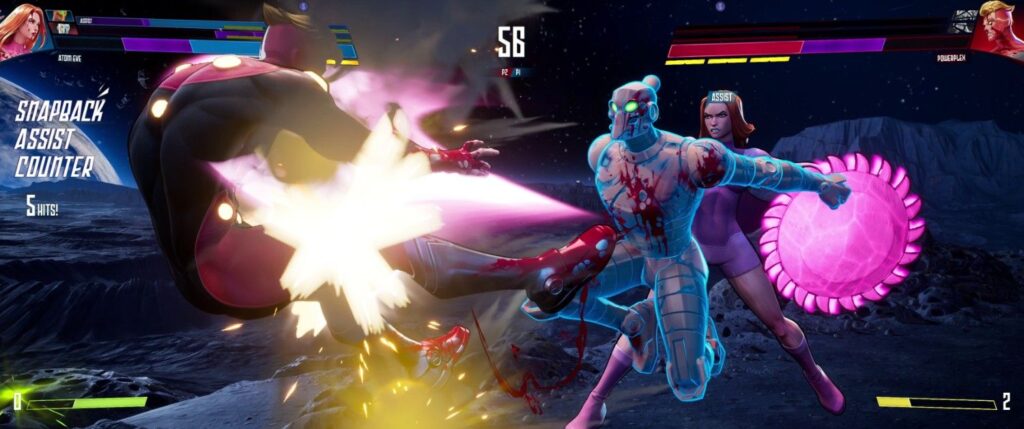
The fighting is mostly easy to pick up and play, with light, medium, and heavy attacks, plus a special attack. For the most part, everyone shares the same inputs for their abilities. Meaning it is not like Mortal Kombat or Street Fighter, where each character has different combos to remember. Instead, it has controls like Super Smash Bros where each character has the same number of abilities and the same inputs, but is unique per character. This approach makes it welcoming for the average button-masher player to pick up and enjoy the game. The gameplay also makes it easy to pull off combos, which can be hard to counter.
As in all fighters, there are controls that go deeper beyond the basic button inputs, as well as the game introducing its own spin on some fighting mechanics. There is a boost ability that can empower special moves, thus creating a stronger version of the attack. This is important to keep in mind for people who want to learn combos. There are also the super abilities, which are the main abilities that use the meter. In addition, there are two normal variations, and then the main ultimate ability. There are super abilities for more combo potentials.
The mechanics go even deeper for players who want to delve deeper into the game’s potential, such as having conditional abilities that will help block attacks or stop combos. There are also throw moves that can be used for creating combos. These more advanced abilities require pressing multiple abilities at once, which some can feel awkward to use at first. However, as the saying goes, practice makes perfect, and with using the abilities, executing them becomes more natural.
The last major component of the combat is the assists, which works similar to the Marvel vs Capcom games. Players pick a team of three characters, and either character can switch at any time or be called in for an assist. Being able to switch characters or use assist attacks is very easy to use. Also, the details of the character’s health bars are lowered; they get more bloodied and battle-damaged. It is a cool detail that also helps keep the vibe of the show.
Story Mode
The game offers a few different modes to play in. The first is a short story mode. It is a quick-paced story with a cool third act but a confusing ending. Unfortunately, it is nowhere near the quality of storytelling as the comic or the show. It is a story made so that the roster of characters can fight each other. Unfortunately, the story mode is a dud and, unfortunately, not a shining flagship part of the game as advertised.
There is more to do beyond playing the story, such as mastering the arcade mode ladders, which are like Mortal Kombat’s towers. The first character chosen is the main character who fights to the end, where there is a new character cutscene unlocked. Nothing new to offer compared to previous fighting game entries, but good to have some sort of single-player grind, which offers replayability. Harder ladders are unlockable, and there are different difficulties the game offers: Easy, Normal, Hard, and Viltrumite. One aspect the game has done well in is making the normal feel like a good challenge for average fighting game fans, which means that more seasoned players hopefully also have a challenge with the greater difficulties.
Online Battles
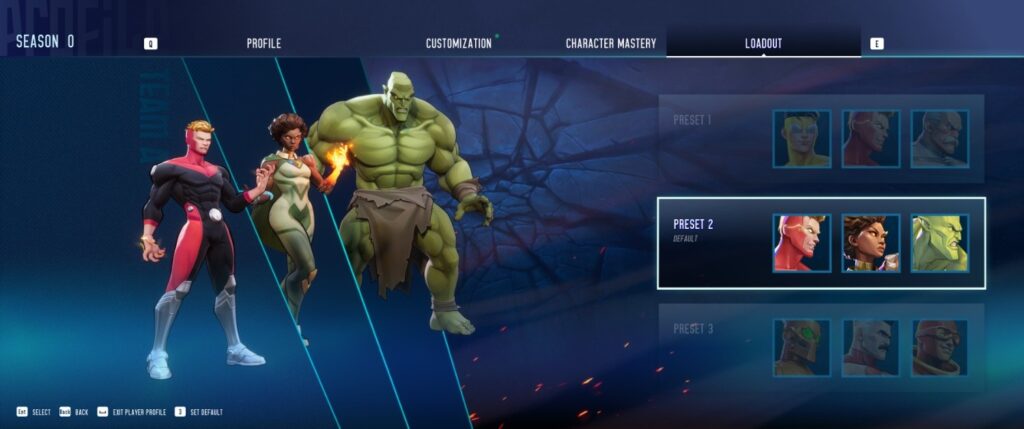
The main part of the game where most people will likely be fighting is online, where there’s ranked, quick play, and lobbies. Ranked and Quickplay have a nice setup where players can choose 3 fighting teams as well as pick what stage they want to fight on. Then at the end of the fights, there’s an option for a rematch if both players agree.
There are lobbies that have a nice layout but are flawed. The lobby has a layout for multiple battles at once and spectating. Unfortunately, if a battle has already started, players can’t spectate until the next fight. Another big problem is that there’s no stage select in the private lobbies. This is a very odd and disappointing design choice, where when fighting privately among friends, you can’t select what stage you are playing on, but you can against randoms. Another annoyance with the lobbies is having to go to the player’s social menu to switch character sets instead of right before the fight, yet another feature against randoms that is not a feature for private lobbies. Hopefully, lobbies improve with future updates. There were also lots of annoying server errors when joining friends, which hopefully will be fixed by launch day.
One more odd design choice is that to set up a custom single fight against a CPU fighter, you have to go to the versus local menu. The player picks which side they want to play on, and the CPU will fill the other side. Single CPU fights are a great way to test characters outside of the practice range, but unfortunately, the game hides where it is.
Rewards
The game also provides rewards where players can earn just by playing. There are both overall player levels and individual character levels. Regardless of fighting offline or online, the characters will gain their own levels. Having the option to play where the player wants to play and still gain levels is a welcome feature. The character levels occasionally unlock new skins. But the main unlockables are background and titles for player cards, which are customizable for online play. Also, player levels unlock some stages and collectibles, such as comic art, for the collection menu. The leveling system provides a solid incentive to earn the rewards, as it allows you to “play your way” to earn.
Final Reaction
Overall, Invincible VS is a bloody, fun, and solid fighting game, but not without its annoyances. The single-player content available might get repetitive easily. However, the game could thrive with its community as the popularity of Invincible is only growing. It makes it a welcoming fighter for new players to check out.
Invincible VS is developed by Quarter Up, which is a subsidiary of Skybound Games. It’s a new studio that includes ex-Killer Instinct developers and is available to purchase now on Steam, PS5, and Xbox Series X/S. You can go to your local comic store and ask for the exclusive physical edition that has a different cover.